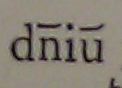


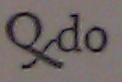

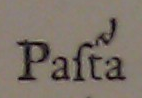
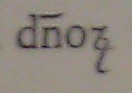
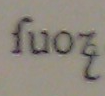
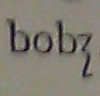
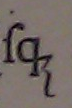

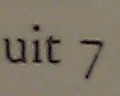


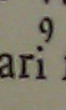

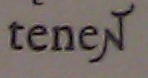


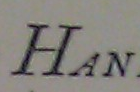

This table shows: the numerical abbreviations used in John Palmer's Latin text of Domesday Book; images of the Record Type original from Farley's Domesday Book; the suggested Unicode character; and examples of the Unicode character rendered in Junicode.
| Abbreviation | Examples in Farley | Unicode literal | In Junicode | Notes |
|---|---|---|---|---|
| 0 | | ᷃ | n᷃ u᷃ b᷃ S᷃ | |
| 1 | | ͛ | n͛ | |
| 2 | | Ꝙ or ?? | Ꝙ | Ꝙ for Q, look for a general "underscore" for other letters, or if we have to, use individual letters with underscore, like ꝑ (p with stroke through descender) from Extended-D |
| 3 | | -- | -- | |
| 4 | | -- | -- | Is ꝣ close enough? that's a "Latin small visigothic z" from Latin Extended-D |
| 5 | | -- | -- | |
| 6 | | -- | -- | |
| 7 | | ⁊ | ⁊ | "Tironian Et" Unicode character - hm not sure this is right. Just use 7? |
| 8 | | ꝓ or ꝙ | ꝓ or ꝙ | Only occurs with p and q - both found in Latin Extended-D |
| 9 | | ⁹ or ꝰ | ri⁹ or riꝰ | Ordinary superscript 9, or "small letter con" from Latin Extended-D |
| 10 | | -- | -- | This always stands for 'nt' so could just expand to that if no character can be found. |
| ^^ | | n/a | n/a | This indicates superscript. No one character: just use appropriate superscript character. |
| M2 | |  plus bar | plus a suitable bar | |
| $ | | Large capital | -- | Just use smallcaps for all other caps, or find a Unicode way to indicate "extra large"? |
| : | | -- | -- |
Looking at the entry for St Pancras.

Transcribed Latin text with numbers standing for scribal symbols - we have this for all of Domesday.
?M2\? Ad Sc1m Pancratiu0 tenent canonici S0 Pauli .IIII^or^.
hid1. T1ra .e0 .II. car1. Vill0i hn0t .I. car0. 7 alia car1 poteft
fieri. Nem9 ad fepes. Paft3a ad pecun1. 7 XX^ti^. den1. Ibi
IIII. uill0i q^i^ tene10 hanc t1ra0 fub canon1. 7 VII. cot1.
$In totis ualentijs. ual0 .XL. fol0. q2do recep0 fimilit1.
T.R.E: LX. fol0. Hoc M2 fuit eft in dn0io S0 Pauli.
Is it possible to translate the ASCII into Unicode in a systematic way?
?M2\? Ad Sc͛m Pancratiu᷃ tenent canonici S᷃ Pauli .IIII ͦ ͬ.
hid͛. T͛ra .e᷃ .II. car͛. Vill᷃i hn᷃t .I. car᷃. 7 alia car͛ poteft
fieri. Nem⁹ ad fepes. Paft3a ad pecun͛. 7 XX^ti^. den͛. Ibi
IIII. uill᷃i qͥ tene10 hanc t͛ra᷃ fub canon͛. 7 VII. cot͛.
$In totis ualentijs. ual᷃ .XL. fol᷃. q2do recep᷃ fimilit͛.
T.R.E: LX. fol᷃. Hoc M2 fuit eft in dn᷃io S᷃ Pauli.
John has manually expanded the Latin abbreviations - only done for Middlesex.
?M2\? Ad S(an)c(tu)m_Pancratiu(m) tenent canonici_S(ancti)_Pauli .quatuor.
hid(as). T(er)ra .e(st) .II. car(ucis). Uill(an)i h(abe)nt .I. car(ucam). et alia car(uca) potest
fieri. Nem(us) ad sepes. Past(ur)a ad pecun(iam). et uiginti. den(arios). Ibi
IIII. uill(an)i q(u)i tenent hanc t(er)ra(m) sub canon(icis). et VII. cot(arii).
In totis ualentiis. ual(et) .XL. sol(idos). q(uan)do recep(erunt) similit(er).
T(empore). R(egis)._E(dwardi): LX. sol(idos). Hoc M(anerium) fuit est in d(omi)nio S(ancti)_Pauli.
John's non-copyright English translation - only done for Middlesex.
At ST. PANCRAS the canons of St. Paul's hold 4 hides. There is land for 2 ploughs.
The villeins have 1 plough, and another plough can be added.
A wood for fences; pasture for the livestock, and 20d.
4 villeins there who hold this land under the canons, and 7 cottars.
In all, it is worth 40s; when they received it, the same; in the time of King Edward, 60s.
This manor was and is in the demesne of St. Paul's.
Note to self: check out the other medieval fonts listed here.